🔥Limited time only! Get an extra 20% off Transcend Micro or Z2 Auto Travel System! 🔥

CPAPmachines.ca

  • CPAP MACHINES
    • Auto
    • Travel Systems
  • MACHINE PARTS
    • Water Chambers
    • Tubings
    • Filters
    • Power Cords
  • MASKS
    • Nasal Pillow Masks
    • Nasal Masks
    • Full Face Masks
    • MASK PARTS
      • Nasal Pillow Cushions
      • Nasal Cushions
      • Full Face Cushions
      • Frames & Headgears
      • Other Mask Parts
  • ACCESSORIES
    • Sanitizers & Cleaning Tools
    • CPAP Accessories
    • Travel Accessories
0
Login
  • CPAP MACHINES
    • Auto
    • Travel Systems
  • MACHINE PARTS
    • Water Chambers
    • Tubings
    • Filters
    • Power Cords
  • MASKS
    • Nasal Pillow Masks
    • Nasal Masks
    • Full Face Masks
    • MASK PARTS
      • Nasal Pillow Cushions
      • Nasal Cushions
      • Full Face Cushions
      • Frames & Headgears
      • Other Mask Parts
  • ACCESSORIES
    • Sanitizers & Cleaning Tools
    • CPAP Accessories
    • Travel Accessories
Home CPAP product reviews and other helpful tips for CPAP users!

CPAP product reviews and other helpful tips for CPAP users!

Search

Recent Articles

  • Travel-Ready Sleep: A Comparison of the Top CPAP Travel Machines - Which One Is Right For You? July 30, 2025
  • Discover the New ResMed AirFit™ X30i Oral-Nasal CPAP Mask! July 21, 2025
  • CPAP Masks Explained: Best CPAP Masks in Canada July 14, 2025
  • ResMed AirSense 11 vs Philips Respironics DreamStation 2: Which CPAP Machine Is Right for You July 14, 2025
  • Initial Thoughts on the ResMed's new AirTouch N30i CPAP Mask May 08, 2025
  • The Science Behind Improved Sleep with a New Generation CPAP Mask April 16, 2025
  • Resvent iBreeze Auto CPAP: The Perfect Solution for Your Sleep Therapy Needs January 23, 2025
  • Top 10 Best-Selling CPAP Masks of 2025 (So far) January 21, 2025
  • Discover the Features of the New ResMed AirFit F40 Full Face CPAP Mask! October 24, 2024
  • User Insights on the F&P Nova Micro Pillow Mask: Pros and Cons October 16, 2024

Disrupted sleep just as bad for mental health as getting four hours’ rest a night

October 17, 2014

 Sarah Knapton, The Daily Telegraph, National Post Wire Services Jul 10 3:26 PM ET

The quality of rest matters just as much as the quantity, a new study posits, and having disrupted sleep can have as much effect on mental health as only getting four hours a night.  It will come as no surprise to new parents struggling after a night of feeds, or to doctors on call, but being woken up briefly during an otherwise normal night of sleep is as detrimental as sleeping for just four hours.


‘Sleep is not an indulgence’: It’s arrogant to think you don’t need adequate rest, scientists say

“It’s not rocket science,” says Russell Foster, explaining how most of us are deprived of sleep and in need of an early night. No, but it is neuroscience — and as Professor of Circadian Neuroscience at Oxford University, he should know.

Foster is one of the U.K.’s leading experts on sleep, and an evangelical advocate of us all getting eight undisturbed hours each night, not just to improve our physical well being but our mental health, too.

Along with a group of other experts at Cambridge, Harvard and Surrey universities, he has put together a report on sleep and our body clocks, and one of his main conclusions is striking.

“We are the supremely arrogant species; we feel we can abandon four billion years of evolution and ignore the fact that we have evolved under a light-dark cycle,” he told the BBC.

Read more…

Researchers discovered that being woken from a deep slumber by a crying baby or an emergency call causes the same confusion, depression and fatigue as being severely sleep-deprived.

It means that even when people get a total of seven hours sleep a night, having that sleep regularly interrupted will leave them feeling as if they have slept for barely half that time.

Researchers at Tel Aviv University warned that such interruptions were likely to leave parents feeling bewildered, dejected and exhausted and could have a detrimental effect on on-call professionals, including doctors or firemen, impacting upon their attention span and ability to make decisions.

“The sleep of many parents is often disrupted by external sources such as a crying baby demanding care during the night,” said Professor Avi Sadeh.

“Doctors on call, who may receive several phone calls a night, also experience disruptions. These night wakings could be relatively short — only five to 10 minutes — but they disrupt the natural sleep rhythm. The impact of such night wakings on an individual’s daytime alertness, mood, and cognitive abilities had never been studied. Our study is the first to demonstrate seriously deleterious cognitive and emotional effects.”

The team studied 61 adults who were monitored at home using wristwatch-like devices that detected when they were asleep and awake.

The volunteers slept a normal eight-hour night, then experienced a night in which they were woken four times by phone calls every 90 minutes and not allowed to go back to sleep for 15 minutes. The students were asked each following morning to complete computer tasks to assess alertness and attention, as well as to fill out questionnaires to determine their mood.

Disrupted sleepers were found, on average, to be 24% more confused, 29% more depressed and 43% more fatigued

The experiment showed a direct link between disrupted sleep and poor attention spans and negative mood after only one night of frequent interruptions.

The volunteers were found, on average, to be 24% more confused, 29% more depressed and 43% more fatigued after broken sleep.

A second experiment in which volunteers were allowed to sleep for only four hours, showed similar results, suggesting regular night disruption has the same impact as getting only half the recommend eight hours of sleep.

“Our study shows the impact of only one disrupted night,” Sadeh said.

“But we know that these effects accumulate and therefore the functional price new parents — who awaken three to 10 times a night for months on end — pay for common infant sleep disturbance is enormous.

‘Besides the physical effects of interrupted sleep, parents often develop feelings of anger’

“Besides the physical effects of interrupted sleep, parents often develop feelings of anger toward their infants and then feel guilty about these negative feelings.”

Sadeh is currently researching interventions for infant sleep disturbances to reduce the detrimental effects of disrupted sleep on parents.

The team also hopes the findings will encourage employers to reassess shift work and staff being placed on call.

Michal Kahn, a co-author of the report, added: “Our findings bear relevance to substantial portions of the population whose sleep is regularly fragmented, including medical students, shift workers, military personnel and parents.

“Professionals as well as the general public should be aware of the detrimental effects of the various kinds of disruption in sleep on daily functioning and mood and consider countermeasures to minimize their consequences.

The study was published in the journal Sleep Medicine.

Continue reading

Sleep, why it’s essential, how a lack of it can shrink your brain

October 17, 2014

If you snooze, you lose, the saying goes. And if you don't snooze for long or well enough? Well, researchers are just beginning to understand how wide-ranging the consequences of sleep deficits can be. Sleep is one of those facets of life we never notice until it starts to go wrong. Take what happened to a…

Dr. Aw: Sleep, why it's essential, how a lack of it can shrink your brain, and what to do if you can't get enough

Continue reading

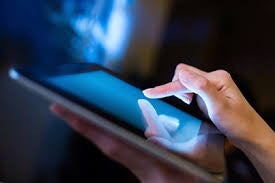
Light from tablets, phones disrupts sleep

October 17, 2014

Screens’ bluish tones cut production of sleep-friendly melatonin. But yes, there is an app for that

What seems like a nice way to wind down the day -- snuggling up in bed with a tablet or notebook -- may be just he opposite. The bluish light from screens appears to interfere with the production of the melatonin that eases us into sleep.

The pervasive glow of electronic devices may be an impediment to a good night’s sleep. That’s particularly noticeable now, when families are adjusting to early wake-up times for school. Teenagers can find it especially hard to get started in the morning. For nocturnal animals, it spurs activity. For daytime species such as humans, melatonin signals that it’s time to sleep.

As lamps switch off in teens’ bedrooms across America, the lights from their computer screens, smartphones and tablets often stay on throughout the night. These devices emit light of all colours, but it’s the blues in particular that pose a danger to sleep. Blue light is especially good at preventing the release of melatonin, a hormone associated with nighttime.

Ordinarily, the pineal gland, a pea-size organ in the brain, begins to release melatonin a couple of hours before your regular bedtime. The hormone is no sleeping pill, but it does reduce alertness and make sleep more inviting.

However, light — particularly of the blue variety — can keep the pineal gland from releasing melatonin, thus warding off sleepiness. You don’t have to be staring directly at a TV or computer screen: If enough blue light hits the eye, the gland can stop releasing melatonin. So easing into bed with a tablet or a laptop makes it harder to take a long snooze, especially for sleep-deprived teenagers who are more vulnerable to the effects of light than adults.

During adolescence, the circadian rhythm shifts, and teens feel more awake later at night. Switching on a TV show or video game just before bedtime will push off sleepiness even later. The next-day result? Drowsy students struggling to stay awake, despite the caffeinated drinks many now consume.

“Teenagers have all the same risks of light exposure, but they are systematically sleep-deprived because of how society works against their natural clocks,” said sleep researcher Steven Lockley of Harvard Medical School. “Asking a teenager to get up at 7 a.m. is like asking me to get up at 4 a.m.”

In 2014 the U.S. National Sleep Foundation, an advocacy organization, polled parents, asking them to estimate their children’s sleep. More than half said their 15-to-17-year-olds routinely get seven or fewer hours of sleep. (The recommendation for teens is 8 1/2 to 10 hours.) In addition, 68 per cent of these teens were also said to keep an electronic device on all night — a TV, computer, video game or something similar.

Based on what parents reported, sleep quality was better among children age 6 to 17 who always turned their devices off: 45 per cent of them were described as having excellent sleep quality vs. 25 per cent of those who sometimes left devices on.

“It is known that teenagers have trouble falling asleep early, and every teenager goes through that,” said light researcher Mariana Figueiro of the Rensselaer Polytechnic Institute in Troy, N.Y.

Figueiro investigates how light affects human health, and her recent research focused on finding out which electronics emit blue light intense enough to affect sleep. Comparing melatonin levels of adults and teenagers looking at computer screens, she was astonished by the younger group’s light sensitivity. Even when exposed to just one-tenth as much light as adults were, the teens suppressed more melatonin than the older people.

In another experiment, she had adults use iPads at full brightness for two hours and measured their melatonin levels with saliva samples. One hour of use didn’t significantly curtail melatonin release, but two hours did.

“The premise to remember is [that] all light after dusk is unnatural,” Lockley said. “All of us push our sleep later than we actually would if we didn’t have electric light.”

A study from 2013 found that people who spent a week camping in the Rocky Mountains, exposed to only natural light and no electronic devices, had their circadian clocks synchronized with the rise and fall of the sun. Although there were only eight campers, they all reacted in the same way, whether they considered themselves early birds or night owls.

So light serves as a cue, but how? It has long been known that the retina contains two types of photoreceptors, or light sensors: rods and cones. The cones allow us to see colours, while the ultra-sensitive rods are used for night vision, motion detection and peripheral vision. But surprisingly, neither of them is the body’s primary tool for detecting light and darkness and synchronizing our circadian clocks.

There’s a third kind of sensor in our eyes, officially discovered in 2002. Called intrinsically photosensitive retinal ganglion cells, or ipRGCs, these relatively crude sensors are unable to pick up on low levels of light — from a dim night light, for example — but sluggishly signal light changes.

They are the body’s way of sending ambient light information to the master circadian clock, a huddle of nerve cells in the brain. This clock makes the pineal gland start and stop the secretion of melatonin. The ipRGCs are most sensitive to blue light — that’s why blue light is bad for your sleep.

To counteract the effects of tablets’ blue light, Figueiro and Lockley recommend a free app, F.lux, that automatically warms up the colours on your various screens — more reds and yellows — at sunset and returns them to normal at sunrise.

“The amount of light you need (in order) to see is lower than the amount of light you need to affect your melatonin,” Figueiro said, which means that light-emitting screens can be used at night without disrupting sleep cycles if you put some distance between your eyes and the device. In other words, place the tablet farther away from your face than usual, or watch TV instead. Also, turning the brightness setting down on laptops, tablets and phones should help.

But for teenagers, this doesn’t completely remedy the problem of early school start times. Lockley also blames the early-morning sluggishness of many students on school start times that ignore their changing body clock.

By: Meeri Kim The Washington Post, Published on Sun Sep 14 2014


Continue reading

  • 1
  • …
  • 52
  • 53
  • 54
  • 55

Search

Recent Articles

  • Travel-Ready Sleep: A Comparison of the Top CPAP Travel Machines - Which One Is Right For You? July 30, 2025
  • Discover the New ResMed AirFit™ X30i Oral-Nasal CPAP Mask! July 21, 2025
  • CPAP Masks Explained: Best CPAP Masks in Canada July 14, 2025
  • ResMed AirSense 11 vs Philips Respironics DreamStation 2: Which CPAP Machine Is Right for You July 14, 2025
  • Initial Thoughts on the ResMed's new AirTouch N30i CPAP Mask May 08, 2025
  • The Science Behind Improved Sleep with a New Generation CPAP Mask April 16, 2025
  • Resvent iBreeze Auto CPAP: The Perfect Solution for Your Sleep Therapy Needs January 23, 2025
  • Top 10 Best-Selling CPAP Masks of 2025 (So far) January 21, 2025
  • Discover the Features of the New ResMed AirFit F40 Full Face CPAP Mask! October 24, 2024
  • User Insights on the F&P Nova Micro Pillow Mask: Pros and Cons October 16, 2024

Customer Service

  • Return Policy
  • Shipping & Cancellations
  • Final Sale Items
  • Prescription, Quotes & Insurance
  • Order FAQs
  • Machine FAQs

Help Centre

  • How To Select A CPAP Mask
  • How To Create A Quote
  • CPAP Customer Account
  • Calculating Shipping Costs
  • ADP Funding
  • Clinical Updates & Posted Notices

Menu

  • About Us
  • Our Mission
  • MySupply Loyalty Program
  • About Obstructive Sleep Apnea
  • Product Reviews & Blogs

Contact

  • Access Instant 24/7 Help Here
  • 1 (844) 925-2727 (9:00a-5:00p EST)
  • shop@cpapmachines.ca
  • Terms Of Service
  • Privacy

Language

  • English
  • Français
American Express Apple Pay Google Pay Mastercard PayPal Shop Pay Visa

© 2025 CPAPmachines.ca. Powered by Shopify

English
English
CAD
  • CAD
CAD
/
English
Language
English
Currency
CAD
  • CAD
CAD
/
English
Language
English
Currency
CAD
  • CAD
Cancel